Good weather alerts describe the travel, power, flood, or evacuation consequence that changes operations.
Severe weather alerts
Severe weather alert templates for hurricanes, flooding, winter storms, and heat risk.
Copy an alert or open it directly in PushMe to track severe weather when it starts affecting travel, infrastructure, evacuations, and the power grid.
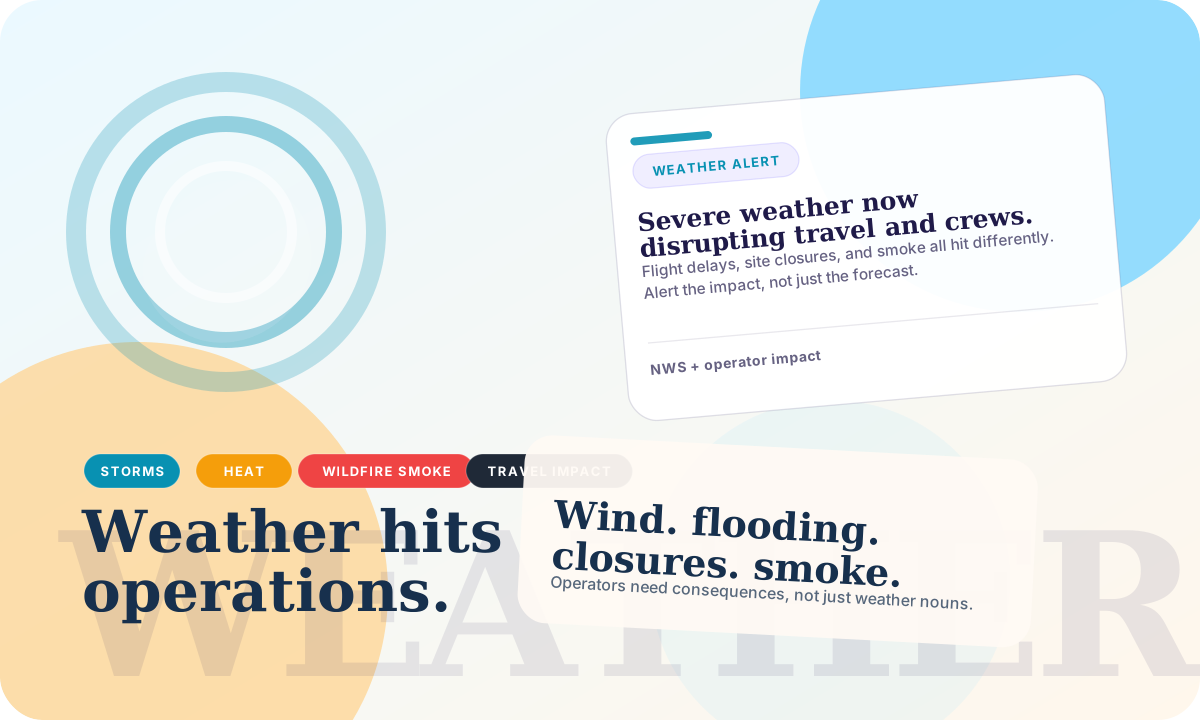
Landfall, flood corridor, grid region, or airport cluster matters more than a generic “bad weather” watch.
Hurricanes, blizzards, floods, and extreme heat do not escalate the same way, so they should not share one watch.
Major hurricane
WeatherTrack high-impact hurricane warnings.
Installs immediately if you are signed in.
Winter storm
WeatherEarly warning for blizzards.
Installs immediately if you are signed in.
Major flooding
WeatherTrack flood-driven disruption.
Installs immediately if you are signed in.
Extreme heat
WeatherAlert on heat-driven grid stress.
Installs immediately if you are signed in.
Tornado outbreak
WeatherRapid severe-weather disruption watch.
Installs immediately if you are signed in.
What makes a good weather alert
The best weather watches focus on impact, not just meteorology. Track landfall risk, airport closures, flooding that shuts infrastructure, or heat severe enough to push the grid into emergency conditions.
If your workflow depends on operational continuity, combine this page with outage alerts so severe weather and service impact show up in one monitoring stack.
How to track disruption instead of generic forecast chatter
A useful weather watch says what changed in the real world. Landfall expectations, flood-driven shutdowns, travel system disruption, and heat-related grid stress are stronger triggers than broad “storm incoming” language that never turns into action.
Keep separate watches for different failure modes when your response differs. Airport disruption, coastal landfall risk, and grid stress are all weather-adjacent, but the operators, timelines, and downstream consequences are not the same.
Bad weather alert wording vs better wording
Bad: “Storm alert.” Better: “Category 4 or 5 hurricane expected to make landfall in the US.”
Bad: “Flood warning.” Better: “Severe flooding event causing infrastructure shutdowns.”
Bad: “Heat alert.” Better: “Extreme heatwave causing power grid stress or rolling blackouts.”
The best severe weather alert templates stay close to the disruption that changes your response. Add the geography, the expected impact, and the operating consequence instead of tracking weather chatter in the abstract.
Need more templates?
Browse the full library or open the most practical editorial guides.