Status pages, advisories, release notes, and regulator notices should beat summaries in your first check.
How to Verify Alerts with Primary Sources
Commentary can help with interpretation, but it should not be the source that decides whether you act.
Verify that timing, impact, and affected region or product match the direct source before routing an alert onward.
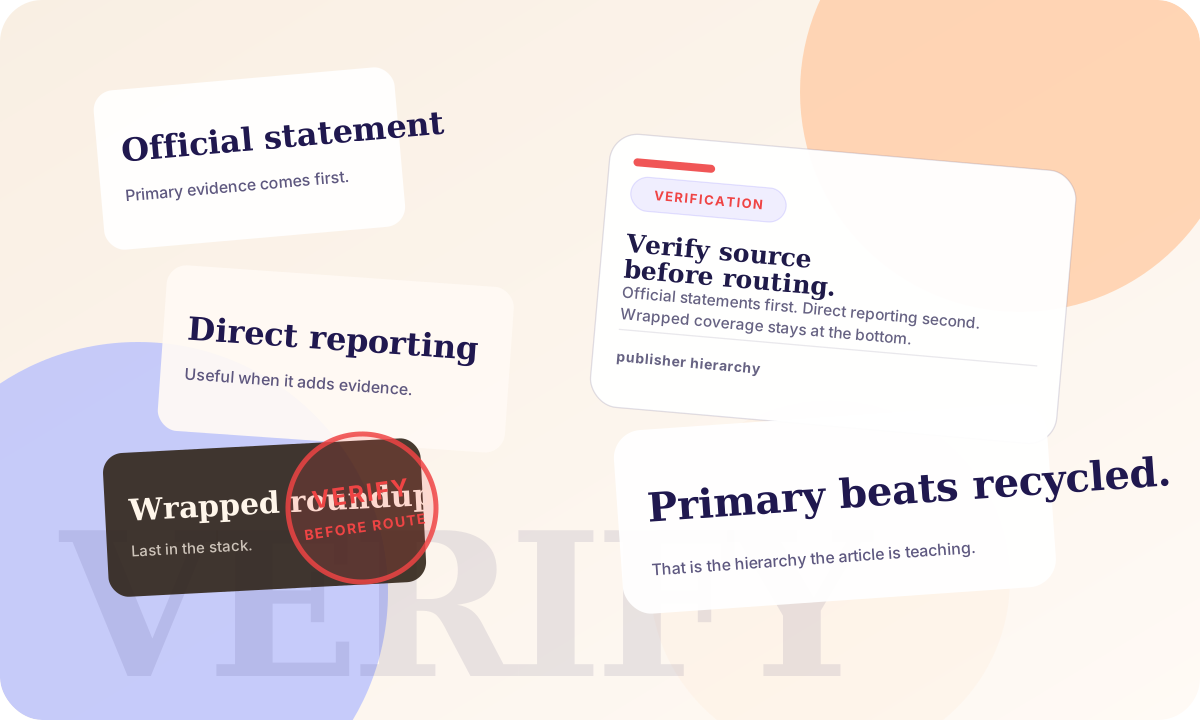
Good alerts should be easy to trace back to original evidence. If an alert depends on wrappers, summaries, second-hand rewrites, or query-generated mirrors, trust drops fast because you can no longer tell who actually said what first.
That is why primary sources matter. They do not guarantee truth on their own, but they give you the first reliable place to check whether a claim is real, scoped correctly, and worth acting on.
The practical rule
When an alert matters, verify it against the closest available primary source before you trust the summary that spread faster.
Why primary sources matter for alerts
Alerting systems fail when they collapse source quality into one undifferentiated feed. A vendor status page, an official advisory, a regulator notice, a direct product changelog, and a commentary article are not the same thing. They should not carry the same weight.
Primary sources help in two ways. First, they shorten the path from claim to evidence. Second, they make it easier to distinguish a real update from recycled noise around the same story.
What counts as a primary source for alert verification
- Outages: vendor status pages, official incident updates, and direct customer-facing acknowledgments.
- Security: vendor incident notices, CISA advisories, official CVE or KEV updates, and named victim statements.
- Weather: National Weather Service products, local emergency management notices, DOT updates, and utility outage maps.
- AI vendor changes: release notes, pricing pages, policy docs, product blogs, and official status pages.
What recycled coverage gets wrong
Recycled coverage often strips out the operational detail you actually need. A wrapper headline may say a service is down, but the vendor status page is the place that tells you whether the failure is regional, whether mitigation started, and whether customer impact is acknowledged.
The same pattern shows up in security and AI coverage. Commentary spreads fast, but the direct advisory, changelog, or pricing update is what tells you whether something changed in a way that affects production or budget.
How to verify an alert in practice
- Find the most direct source available for the claim.
- Check whether the primary source confirms the same scope, timing, and impact as the summary.
- Look for a second independent source only after you have checked the first direct one.
- Prefer named publishers, official docs, and direct acknowledgments over aggregator rewrites.
- Escalate only when the alert still makes sense after that source check.
Source hierarchy by alert type
Outage monitoring is strongest when you start from direct vendor acknowledgments and only then look at secondary coverage. Security monitoring often needs both a primary advisory and an independent confirmation. Weather monitoring usually starts with official agencies, then moves to infrastructure impact sources like transit, utilities, or airports. AI vendor change monitoring works best when you check release notes, pricing pages, and policy docs before trusting hype summaries.
If you build watches in PushMe, keep the same hierarchy in mind. Use outage alert templates, security breach alert templates, weather alert templates, and AI vendor change alert templates as starting points, then verify the incoming signal against the right source type.
The standard to aim for
A good alert should feel like it started from a real source, not from a wrapper of a wrapper. Even when a secondary article is useful context, the first verification step should still lead back to a direct publisher, official notice, status page, regulator, or named first report.
That rule matters more than almost any UI tweak. If you want alerts you can actually trust, source quality has to stay visible all the way from ingestion to the moment a human decides whether to act.
Security Alerts
Turn this into a security watch
Track primary advisories, vendor incidents, and exploitation signals instead of waiting for recycled coverage.
Prefer a blank canvas? Open the app.